
*The article is sourced from the Teledyne website
In industrial machine vision, seeing what an object looks like is not always enough. In many applications, the real challenge is determining what the object is made of, identifying material inconsistencies, detecting contaminants invisible to the human eye, or sorting products at high speed without compromising inspection accuracy.
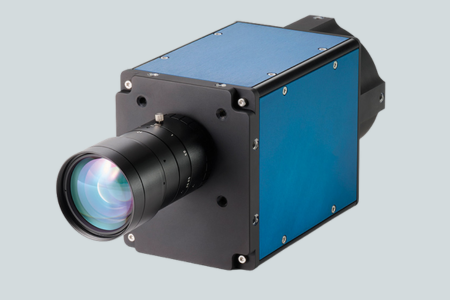
This is where hyperspectral imaging comes into play. By combining industrial imaging with spectral analysis, hyperspectral technology enables manufacturers to analyze the material composition of objects rather than relying solely on their visual appearance. Teledyne DALSA has recently introduced Kaleido™, a new SWIR hyperspectral camera designed for high-speed industrial inspection in applications including recycling, food safety, pharmaceuticals, and waste management.
Looking Beyond Conventional Imaging
Traditional industrial cameras typically inspect shape, color, contrast, surface defects, and other visible characteristics. A hyperspectral camera, on the other hand, analyzes how materials interact with light across multiple wavelengths.
Kaleido operates in the Short-Wave Infrared (SWIR) spectrum, enabling the detection of material differences that are often invisible to conventional RGB cameras. This capability allows manufacturers to distinguish between materials that appear visually identical but differ in their chemical or physical composition.
For industrial inspection systems, this means improved identification of different plastic types in recycling facilities, detection of contaminants in food production, verification of material consistency in pharmaceutical manufacturing, and more reliable sorting on high-speed production lines.
Designed for High-Speed Production Environments
One of the traditional barriers to adopting hyperspectral imaging has been the complexity and cost of integrating multiple components, including sensors, spectrographs, illumination, communication interfaces, and processing algorithms.
Kaleido addresses this challenge through a fully integrated design. The camera combines the image sensor, spectrograph, and communication interface into a single platform, simplifying system integration while maintaining high performance.
It delivers up to 1,280 spatial pixels and line rates exceeding 2.3 kHz, allowing manufacturers to inspect large volumes of material at production speeds while maintaining high-quality spectral information.
These capabilities make the camera particularly well suited for conveyor-based inspection systems where products move continuously and inspection speed is critical.
Stable Calibration and Simplified Integration
Beyond imaging performance, Kaleido has been engineered to simplify deployment for machine builders and system integrators.
The camera incorporates built-in spectral band selection and spectrograph-based aberration correction to maintain consistent calibration across production units and throughout the operating temperature range.
Stable calibration is essential in industrial environments, where even minor variations in spectral response can affect inspection accuracy. By designing the sensor, optics, and communication interface as a unified system, Teledyne helps reduce calibration complexity, shorten integration time, and accelerate deployment from development to production.
Kaleido also incorporates advanced line scan features such as Metadata Tagging and Multiple Regions of Interest (ROI), allowing image processing systems to transfer only relevant data and optimize overall processing efficiency.
High-Speed Connectivity with Lower Illumination Requirements
The camera features a 10GigE interface and supports both GigE Vision and GenICam standards, making it easy to integrate into existing machine vision platforms and industrial automation environments.
Its highly sensitive SWIR sensor maintains strong signal quality even under relatively low illumination levels, enabling the use of efficient SWIR LED lighting solutions while reducing system power consumption and operating costs.
Industrial Applications
Recycling and Material Sorting – Many recyclable materials appear visually similar despite having different chemical compositions. SWIR hyperspectral imaging enables reliable identification of various plastics, textiles, and composite materials based on their unique spectral signatures, improving sorting accuracy and increasing the value of recovered materials.
Food Inspection – Food manufacturers can use SWIR imaging to detect contaminants, foreign objects, moisture variations, and other material characteristics that are difficult- or impossible-to identify using conventional visible-light cameras. This supports faster and more reliable quality control throughout production.
Pharmaceutical Manufacturing – Pharmaceutical production requires consistent material verification and precise quality control. Hyperspectral imaging can help inspect powders, tablets, coatings, and packaging by revealing material differences that conventional imaging systems cannot detect.
Waste Management – Automated waste processing facilities can leverage spectral identification to improve material separation, reduce sorting errors, and increase automation efficiency across recycling and waste recovery operations.
Making Hyperspectral Imaging More Practical
Kaleido represents more than just another SWIR camera. It reflects the ongoing evolution of hyperspectral imaging toward practical, production-ready industrial inspection systems.
By combining high spatial resolution, fast line rates, integrated optics, stable calibration, and standard 10GigE connectivity, Kaleido enables machine builders and system integrators to deploy advanced material identification capabilities without the complexity traditionally associated with hyperspectral systems.
For industries where quality, safety, material verification, and resource efficiency are essential, Kaleido demonstrates how machine vision is evolving beyond conventional imaging—providing manufacturers with deeper insight into the materials themselves.
ASIO Vision supplies advanced Teledyne DALSA machine vision solutions in Israel, supporting customers with the selection, integration, and implementation of industrial imaging, optical, and illumination technologies for demanding inspection applications.